
Naturally nested structures, divide-and-conquer work and decision trees.
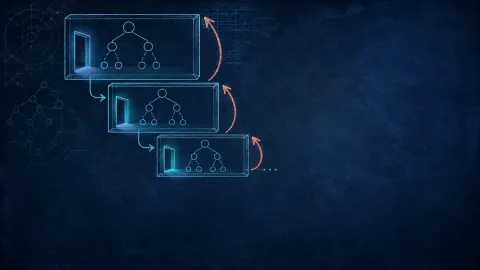
- same task on smaller input
- tree or directory structure
- choose and continue
Each call owns one well-defined subproblem and moves closer to the base case.
Depends on branches and depth. Typical auxiliary space: At least O(depth) call stack.
JAVA STARTING POINT
A template to adapt, not memorize.
static void solve(int index) {
    if (index == limit) return;
    solve(index + 1);
}
Common mistakes
- Missing a base case
- Not reducing the problem
- Ignoring call-stack space
PUBLISHED / 41
Learn in this order.
Available articles always appear before the publishing plan.
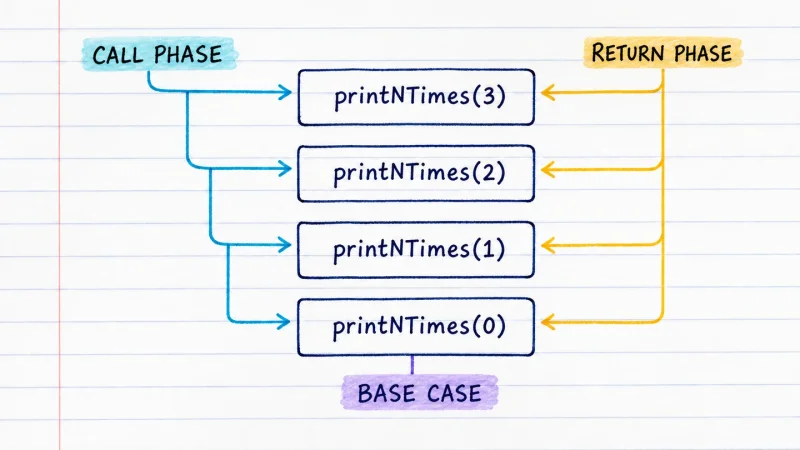
Recursion in Java: A Beginner's Guide to Thinking in Smaller Problems
Learn recursion in Java through base cases, smaller inputs, call-stack diagrams, Java code and complete static dry runs.
Read article →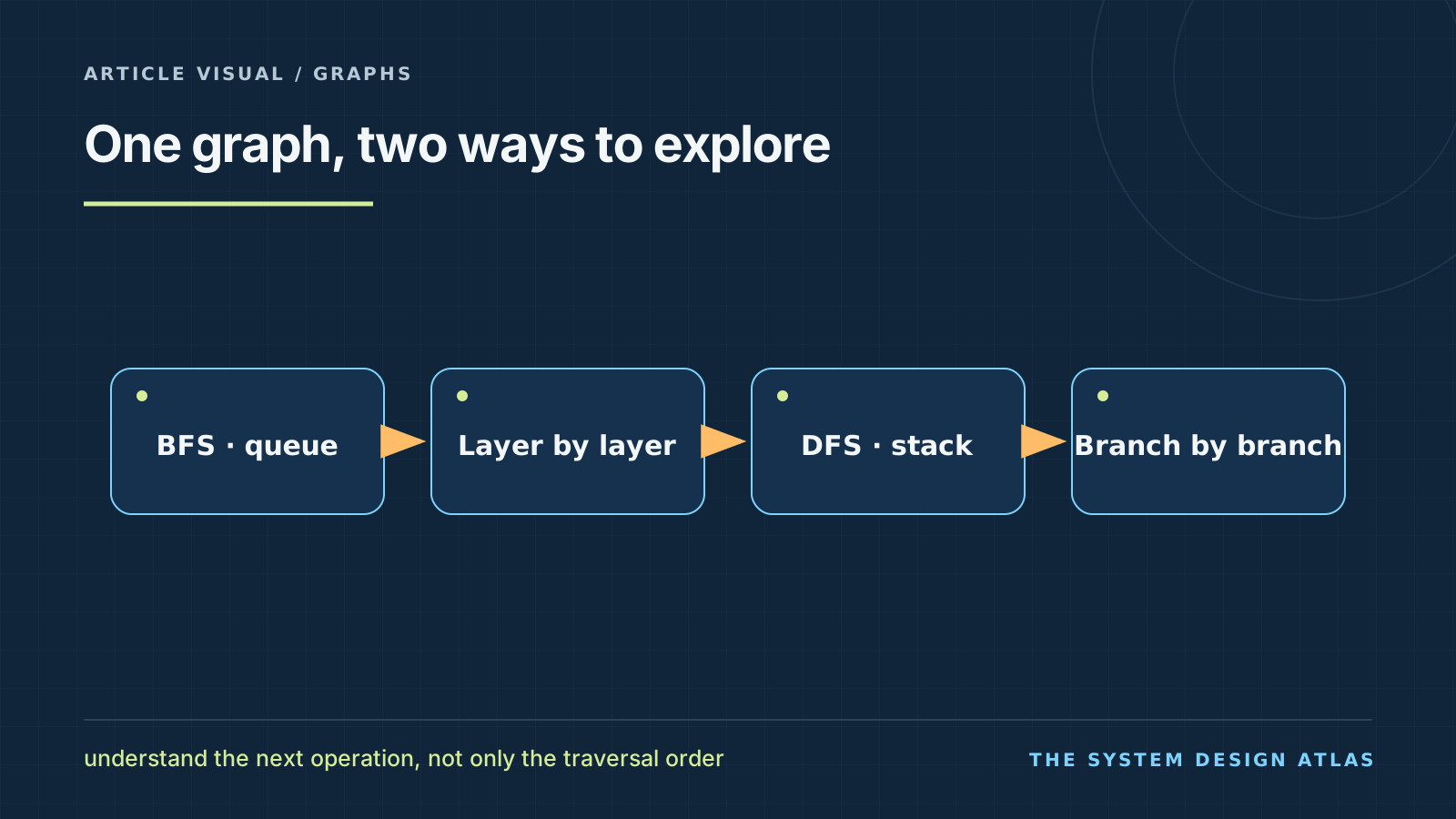
BFS and DFS in Java: A Visual Guide
Learn BFS and DFS with static graph, queue and call-stack traces, tested Java, shortest paths, grids and 12 practical question patterns.
Read article →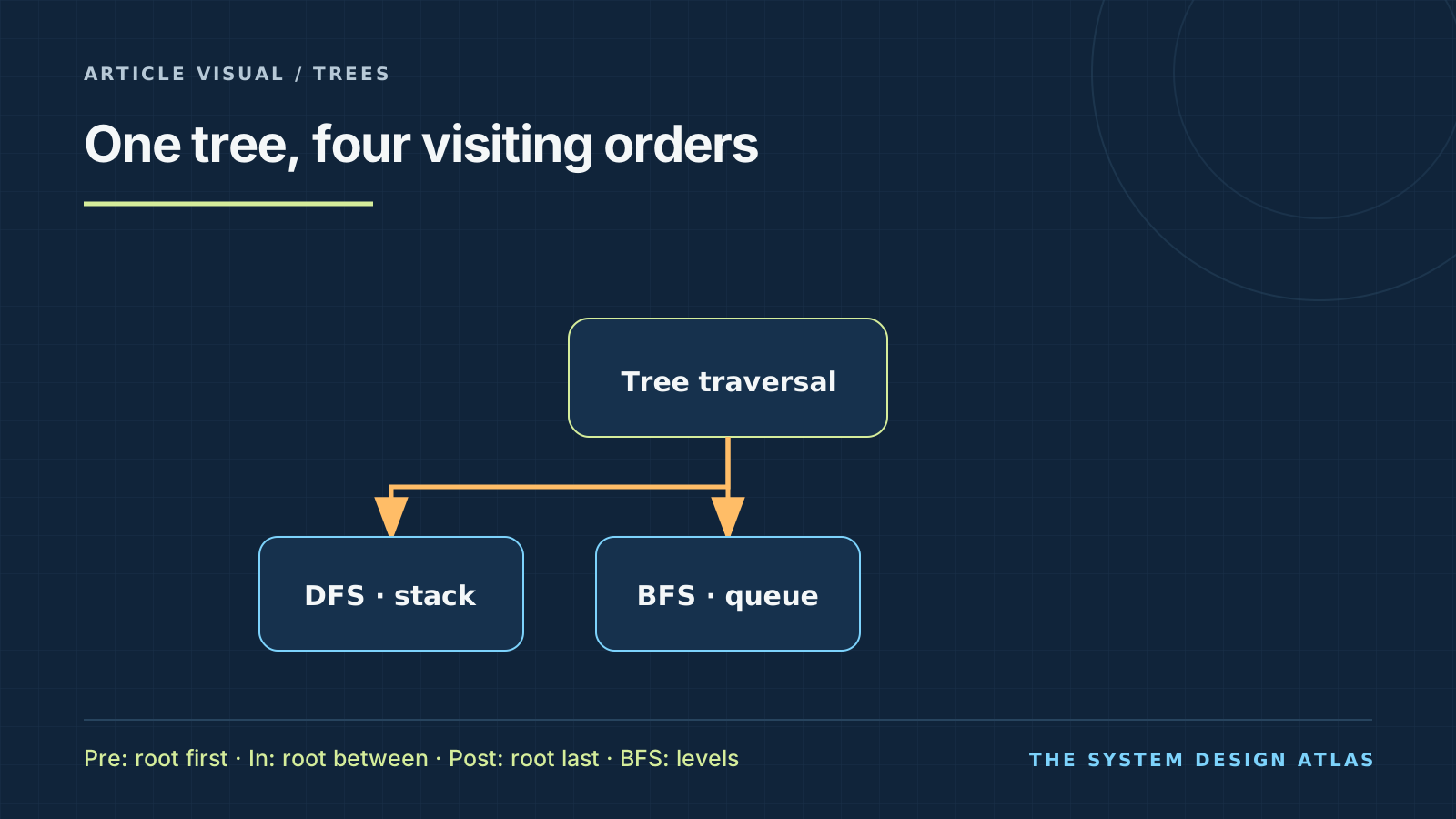
Trees in Java: Roots, Tree Types, DFS and BFS Traversals
Understand tree terminology and shapes, then learn inorder, preorder, postorder and level order with two larger examples, static dry runs and tested recursive and iterative Java.
Read article →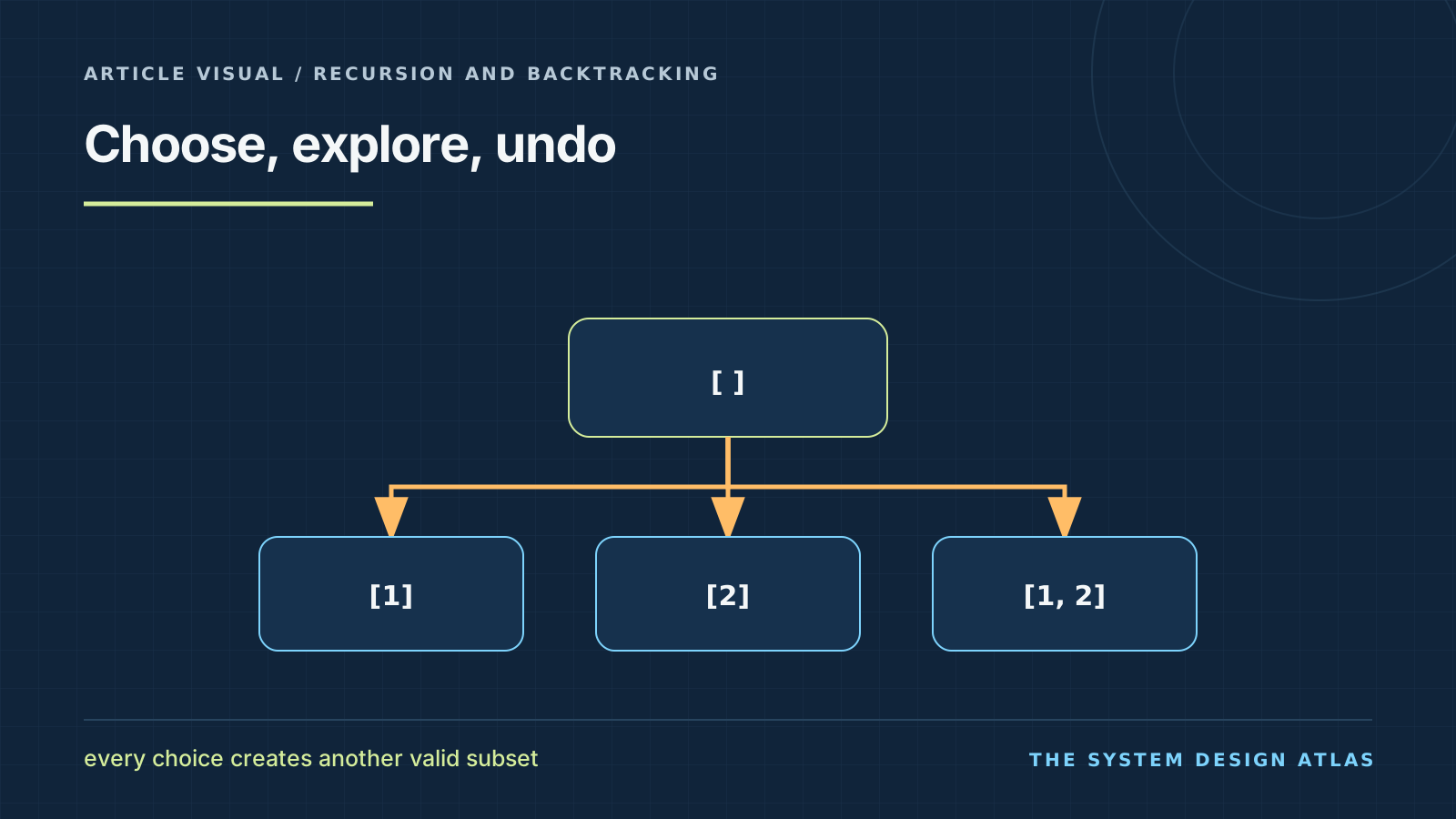
Subsets in Java: From Brute Force to Optimal
Generate every subset of a distinct integer set in Java using bitmasks and backtracking, with a visual dry run and honest complexity analysis.
Read article →
Subsets I in Java: Find Every Subset Sum
Understand take-or-skip recursion by producing every subset sum, with repeated sums, commented Java, a recursion tree and a dry run.
Read article →
Pow(x, n) in Java: Halve the Exponent Safely
Learn exponentiation by squaring, negative exponents, Integer.MIN_VALUE safety and the real call chain through commented Java.
Read article →
Combination Sum in Java: Why Taking Keeps the Same Index
Build reusable-candidate combinations with take/skip recursion, understand the remaining target and undo steps, and analyze output-sensitive complexity.
Read article →
Combination Sum II in Java: Use Each Index Once, Skip Duplicate Branches
Understand i+1, sorted candidate pruning and sibling duplicate skipping with repeated values, a worked target-sum example and commented Java.
Read article →
Subsets II in Java: Unique Subsets Without Losing Repeated Values
Generate unique subsets with duplicates using sorted sibling choices, preserve repeated values inside subsets, and understand copying and undo.
Read article →
Generate Parentheses in Java: Keep Every Prefix Balanced
Build balanced parentheses using remaining counts, understand why close must exceed open, and trace the valid prefix tree.
Read article →
Permutations of a String in Java: Swap, Restore and Remove Duplicates
Generate sorted unique string permutations using your swap-and-backtrack approach, with per-position duplicate handling and an honest sorting cost.
Read article →
Brace Expansion in Java: Parse Choices, Then Build Words
Turn flat brace expressions into sorted choice groups, generate their Cartesian product with recursion, and distinguish nested Brace Expansion II.
Read article →
Word Pattern II in Java: Backtrack a Two-Way Mapping
Understand bijection, two string indices, candidate substrings, successful short-circuiting and undo with a beginner-friendly Word Pattern II solution.
Read article →
Strobogrammatic Number II in Java: Fill Matching Ends
Generate upside-down-symmetric numbers by filling two ends together, handling leading zero and odd centers, with code and a visual dry run.
Read article →
Output Contest Matches in Java: Pair the Ends, Recurse by Round
Construct ranked tournament brackets round by round, understand Java reference passing, and count the real String-copying cost.
Read article →
Reverse a Doubly Linked List in Java: Exchange Both Links
Reverse next and prev pointers in place, trace the saved original-next link, preserve node identity and choose safe iteration for long Java lists.
Read article →
The Knight’s Tour in Java: Choose a Move, Explore, Undo
Find a complete knight tour with legal L moves, visited-state backtracking, success-preserving returns, a board example and tested Java.
Read article →
Recursive Insertion Sort in Java: Sort the Prefix, Insert the Last Value
Implement insertion sort with no loops, use separate recursive sorting and shifting helpers, and explain stability, the return phase and stack cost.
Read article →
Strobogrammatic Number III in Java: Count Numbers Between String Bounds
Count upside-down-symmetric numbers in an inclusive string range with paired-digit recursion, safe comparisons, commented Java and a dry run.
Read article →
M-Coloring in Java: Can Every Neighbor Have a Different Color?
Solve graph coloring with tentative assignments, neighbor checks and backtracking; understand why a triangle needs three colors.
Read article →
N-Queens in Java: Place One Queen per Row, Then Undo
Generate all nonattacking queen boards with row-by-row backtracking, explain diagonal keys and undo, and trace the two solutions for n=4.
Read article →
Palindrome Partitioning in Java: Choose a Valid Prefix, Partition the Rest
Enumerate palindrome partitions by choosing valid prefixes, copying completed paths and undoing; understand substring costs and minimum-cut differences.
Read article →
Rat in a Maze in Java: Explore Every Path Without Reusing Cells
Enumerate sorted maze paths with DFS, path-local visited cells and careful undo; handle blocked endpoints and preserve the input grid.
Read article →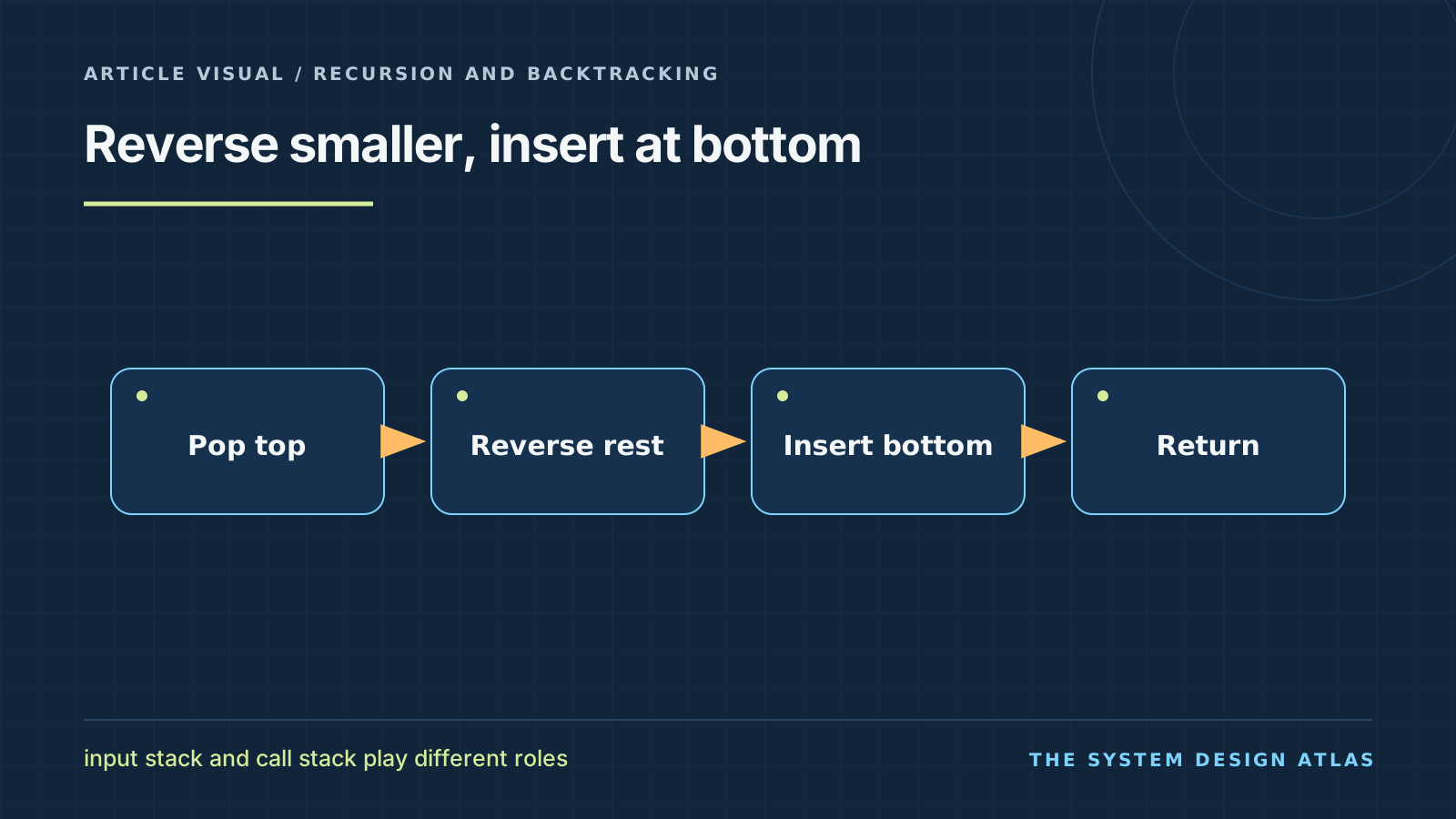
Reverse a Stack in Java: Understand Every Call and Return
Reverse a stack using recursion only, with insert-at-bottom reasoning, LIFO dry runs, commented Java and edge-case tests.
Read article →
Sudoku Solver in Java: Try a Digit, Recurse, Restore on Failure
Solve Sudoku in place with first-empty-cell backtracking, explain row/column/box checks, and distinguish a safe trial from a complete solution.
Read article →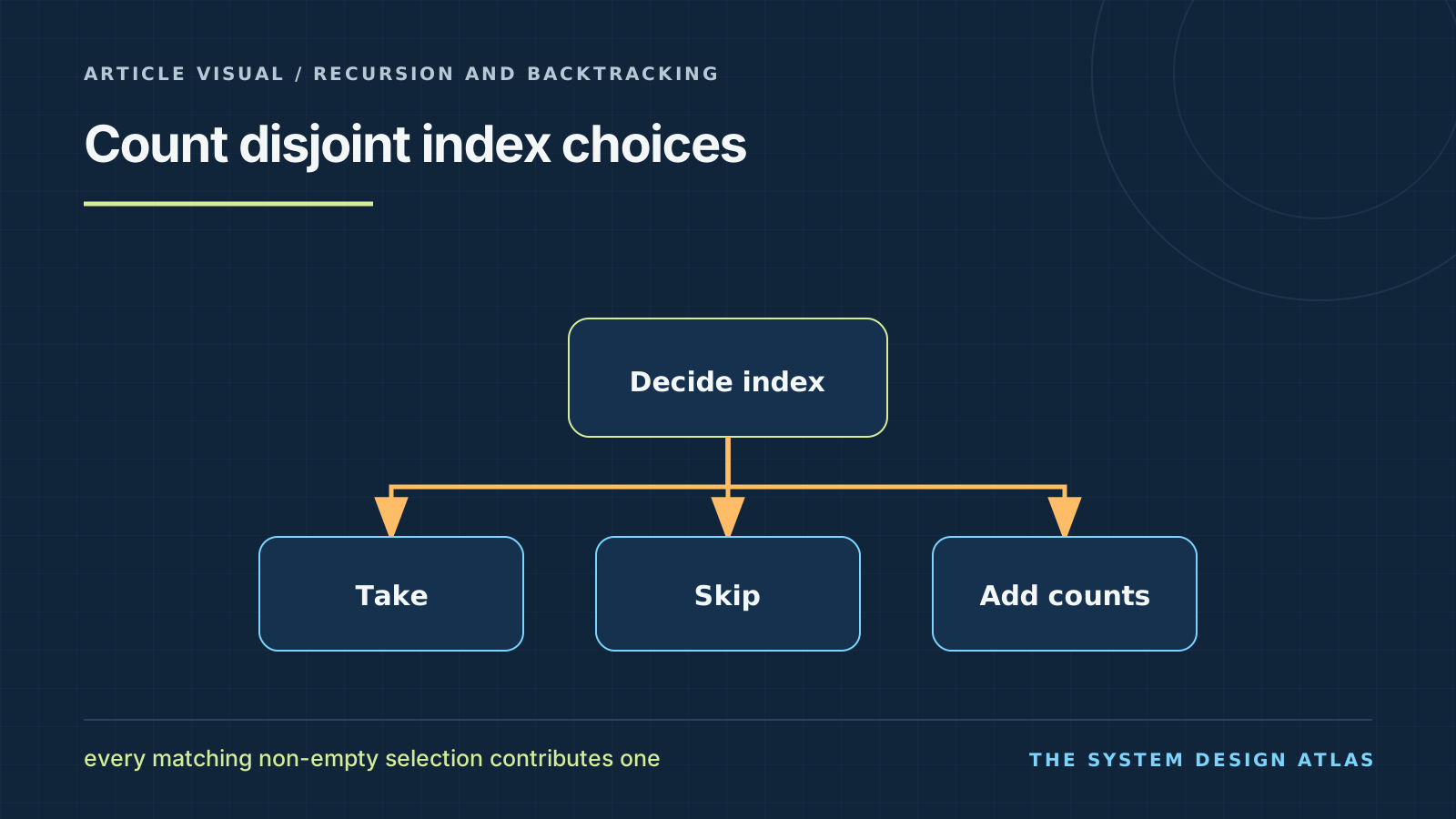
Count Subsequences with Sum K in Java: Choices, Returns, and DP
Understand take-or-skip recursion, non-empty index choices, returned counts, and positive-target dynamic programming with commented Java and a real call tree.
Read article →
Word Search in Java: Match Letters Along One Nonrepeating Path
Find a word through adjacent grid cells using path-local visited marks, short-circuit recursion and restoration, without reusing a cell.
Read article →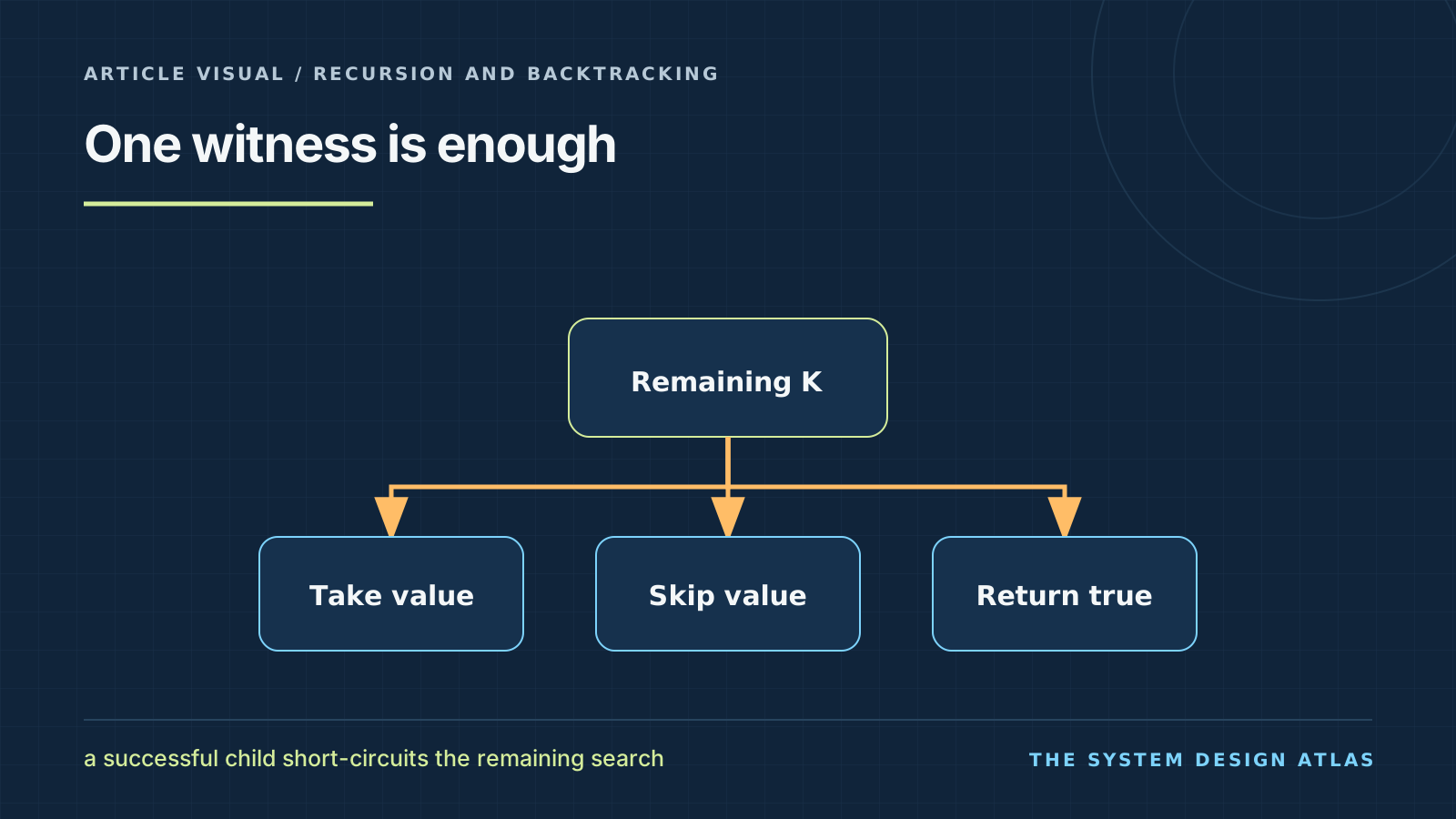
Does a Subsequence with Sum K Exist? Java Recursion and DP
Learn why existence uses short-circuit returns, how take and skip reduce the remaining target, and how bounded subset-sum DP avoids repeated work.
Read article →
Confusing Number II in Java: Build Valid Digits, Count Changed Rotations
Understand confusing numbers with digit rotation, valid-digit DFS, a complete recursion tree, commented Java, dry runs and justified complexity.
Read article →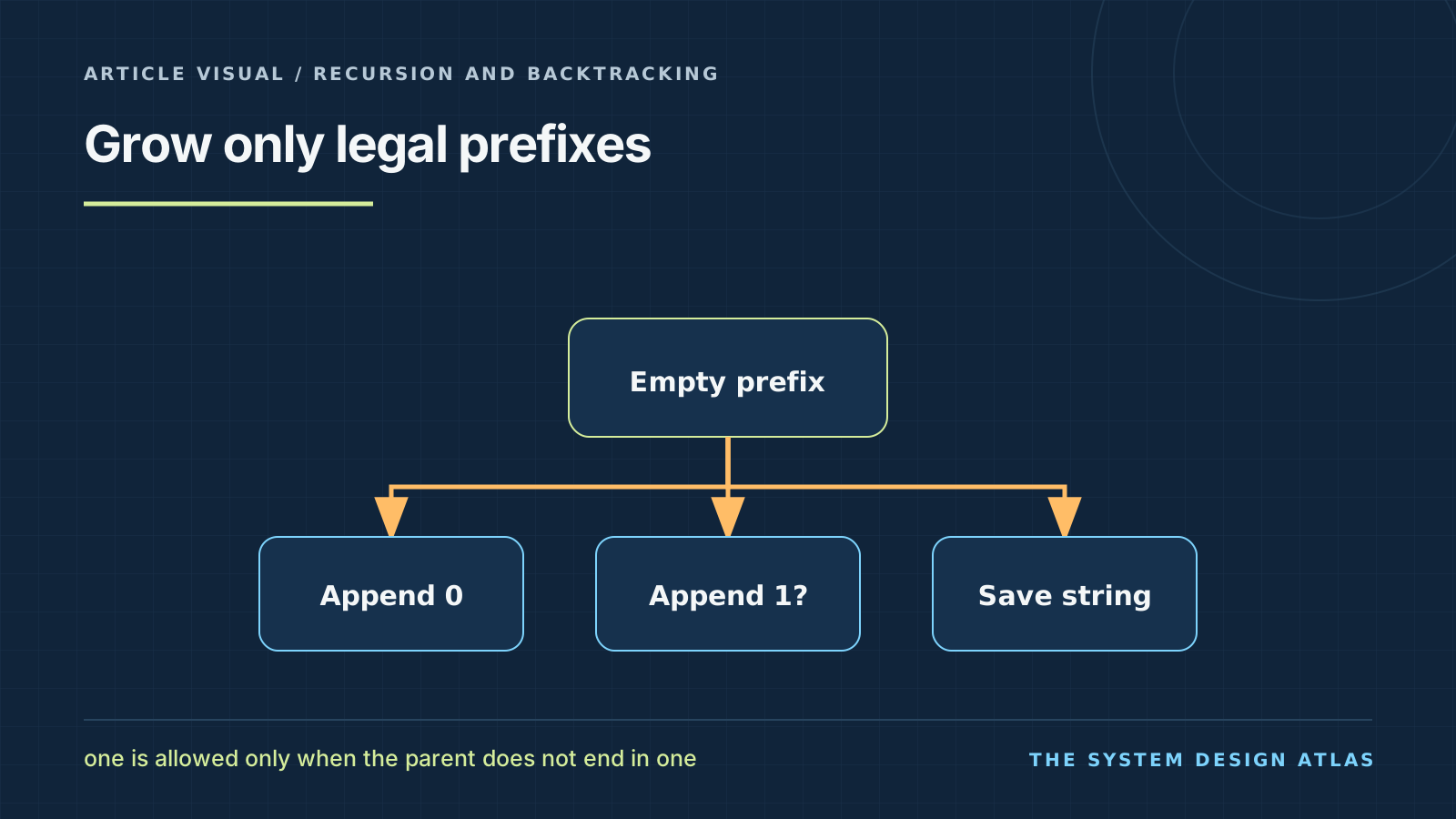
Generate Binary Strings Without Consecutive Ones in Java
Build only valid binary strings, understand every choose-and-undo step, and connect the recursion tree to Fibonacci counts and lexicographic order.
Read article →
Robot Room Cleaner in Java: Explore Blindly, Return Safely
Derive blindfolded DFS using relative coordinates, keep the robot's direction synchronized, and follow physical backtracking through commented Java and a static dry run.
Read article →
Palindrome Permutation II in Java: Build Half, Then Mirror
Understand odd frequencies, duplicate-free half permutations, shared state restoration, and a step-through recursion tree with fully commented Java.
Read article →
Letter Combinations of a Phone Number in Java: One Digit, One Choice
Learn phone-keypad backtracking from first principles, with examples, commented Java, a numbered image dry run, state restoration and output-sensitive complexity.
Read article →
Print an Immutable Linked List in Reverse: Java Call-Stack Reasoning
Print backward without changing links or reading hidden fields, using recursive returns, an explicit-stack alternative and an API-faithful dry run.
Read article →
Permutation Sequence in Java: Skip Whole Factorial Blocks
Derive the kth permutation from a backtracking baseline, factorial block sizes and zero-based ranks, with commented Java and an illustrated dry run.
Read article →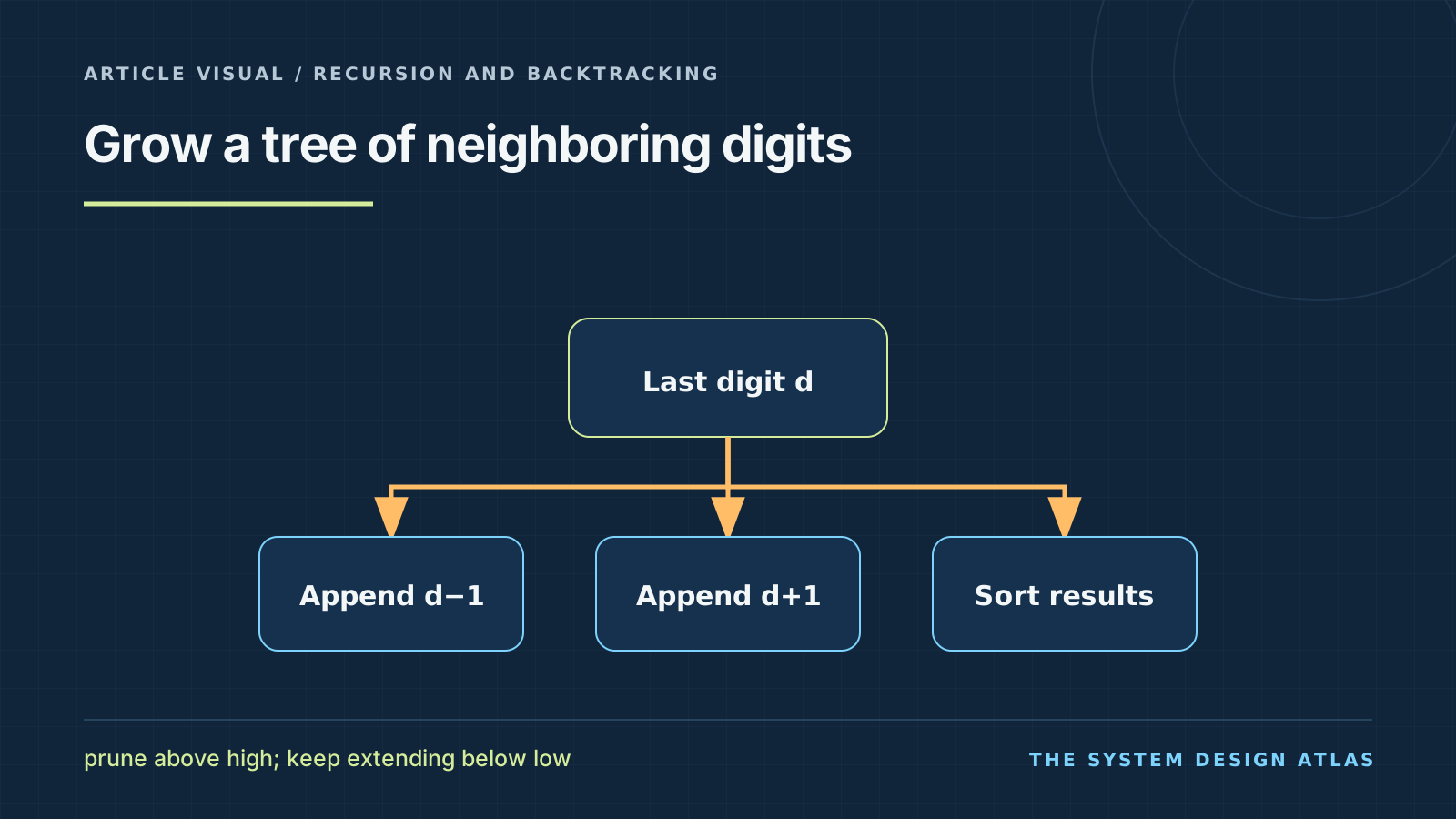
Stepping Numbers in Java: Grow a Digit Tree Instead of Scanning a Range
Generate sorted stepping numbers with digit-based DFS, boundary checks, safe arithmetic, an actual recursion tree, and beginner-friendly Java explanations.
Read article →
Combination Sum III in Java: Exactly k Distinct Digits
Understand exactly-k digit combinations with a subset baseline, take/skip recursion, safe sum bounds, commented Java and a complete illustrated dry run.
Read article →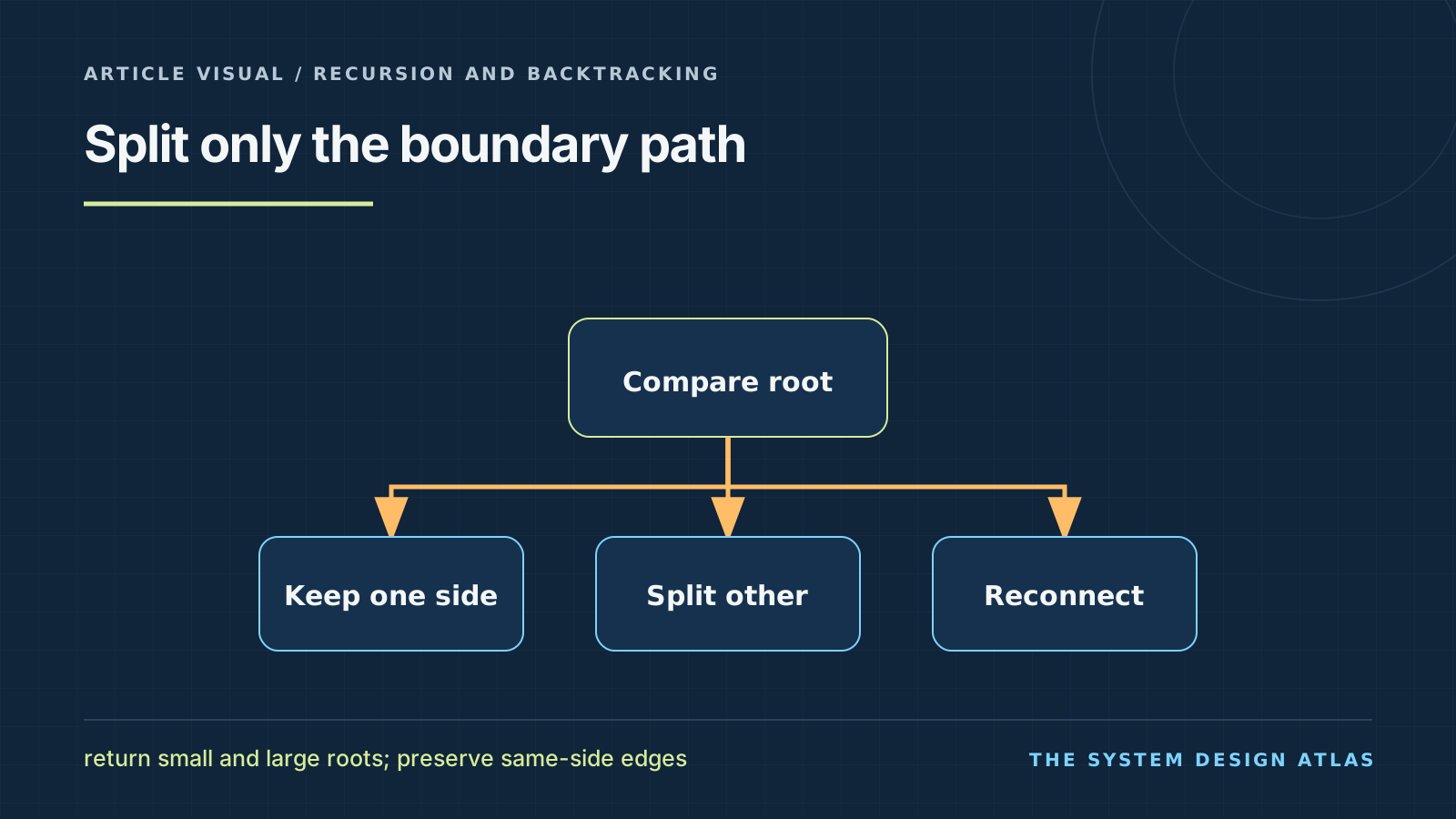
Split a BST in Java: Return Two Trees Without Rebuilding Them
Reason about <=target and >target roots, preserve existing parent-child structure, trace pointer reconnections, and understand O(height) recursion with commented Java.
Read article →
Expression Add Operators in Java: Backtrack Without Losing Precedence
Build every matching arithmetic expression with operand boundaries, signed last-term tracking, leading-zero guards, commented Java and an illustrated dry run.
Read article →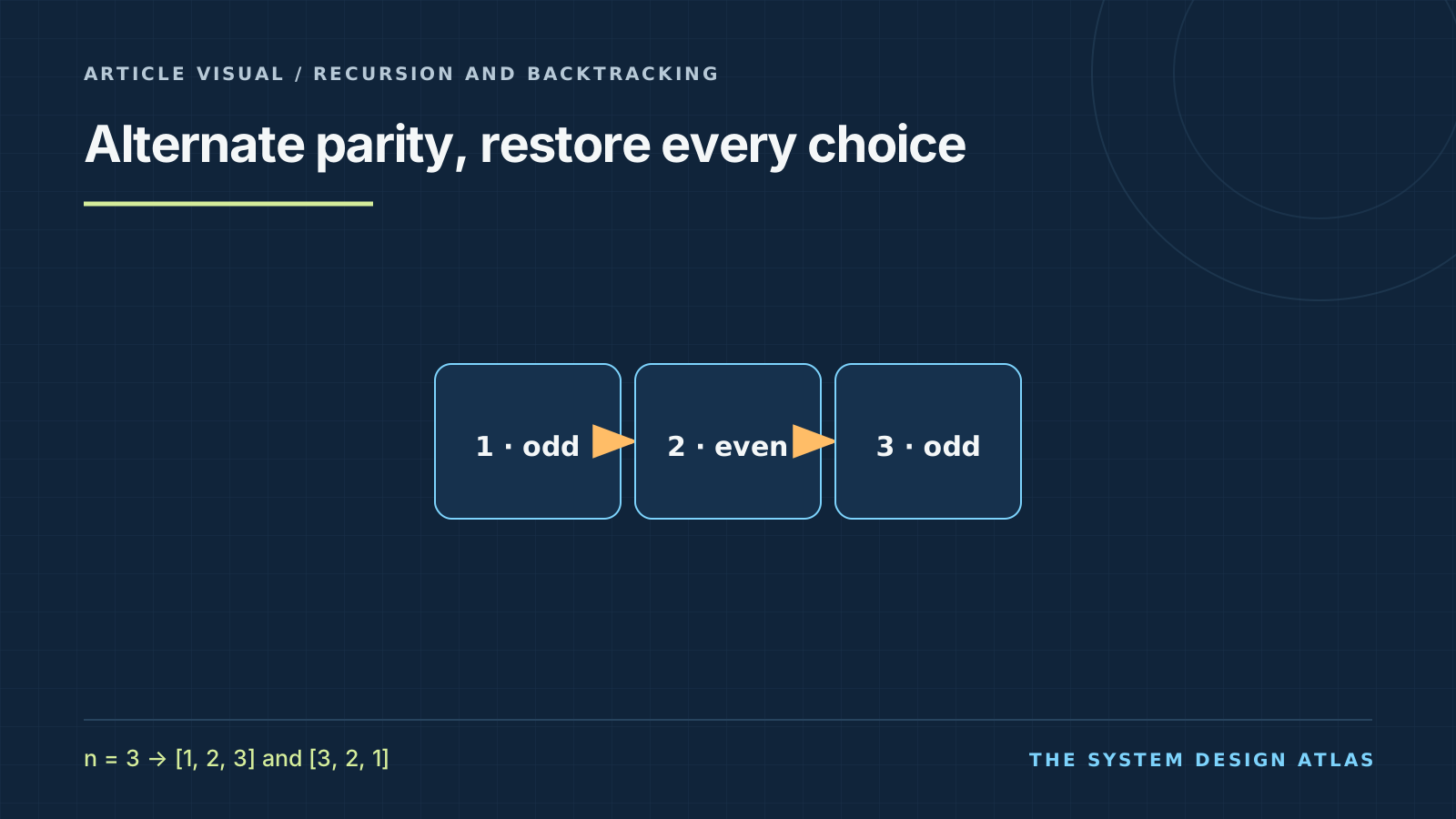
Permutations III in Java: Alternate Odd and Even with Backtracking
Learn parity-constrained permutations with simple reasoning, commented Java, a recursion tree and dry runs showing choices, returns and undo.
Read article →
Basic Calculator III in Java: Parse Precedence and Parentheses
Derive a calculator from grammar levels, with a quadratic baseline, linear recursive descent, commented Java, cursor-by-cursor dry run and integer division rules.
Read article →PLANNED PRACTICE
What comes after the published lessons.
- Print from 1 to nPlanned, not yet published
- Generate valid parenthesesPlanned, not yet published