Java Design Principles for Low-Level Design: A Practical Login Service
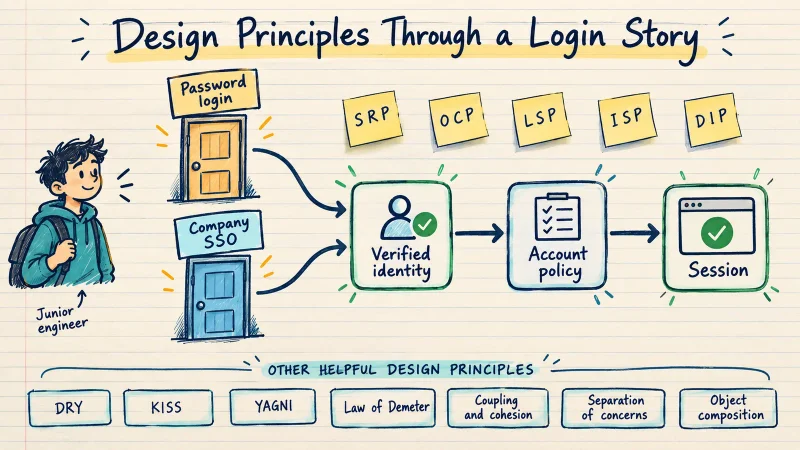
Understand SOLID, DRY, KISS, YAGNI, coupling, cohesion, and composition through a Java login service with diagrams, failure cases, and runnable examples.
Available now / 04
Understand SOLID, DRY, KISS, YAGNI, coupling, cohesion, and composition through a Java login service with diagrams, failure cases, and runnable examples.
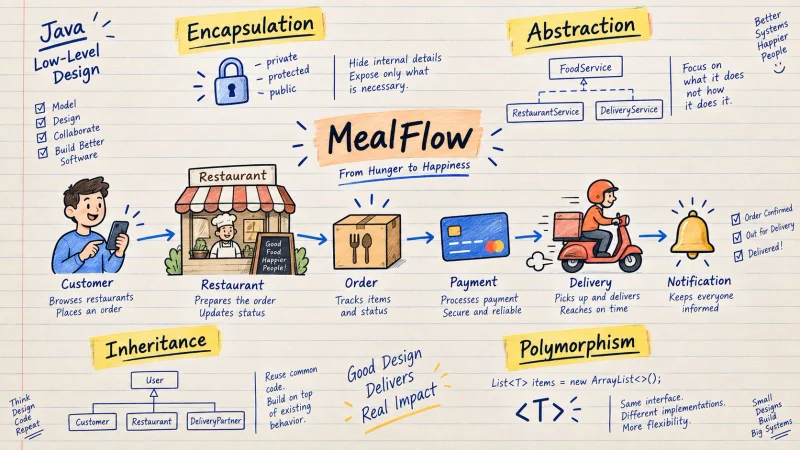
Learn Java encapsulation, abstraction, inheritance, polymorphism, access modifiers, class relationships, generics, and wildcards through the MealFlow design.
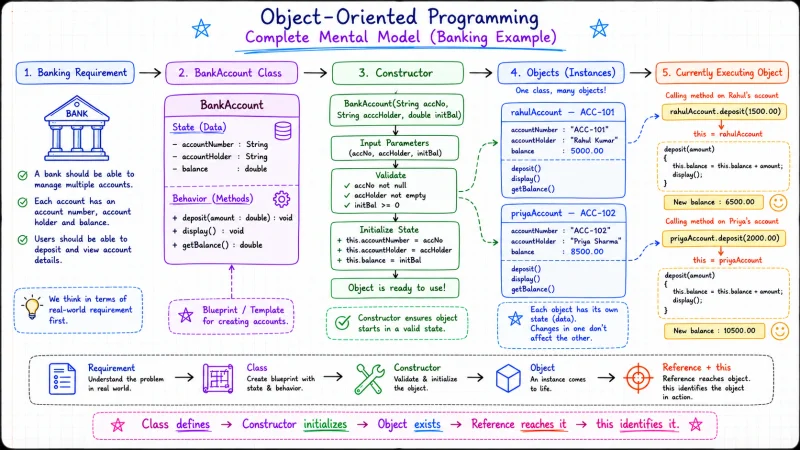
Learn Java OOP for low level design with classes, objects, constructors, references, shallow and deep copies, and the this keyword through clear examples.
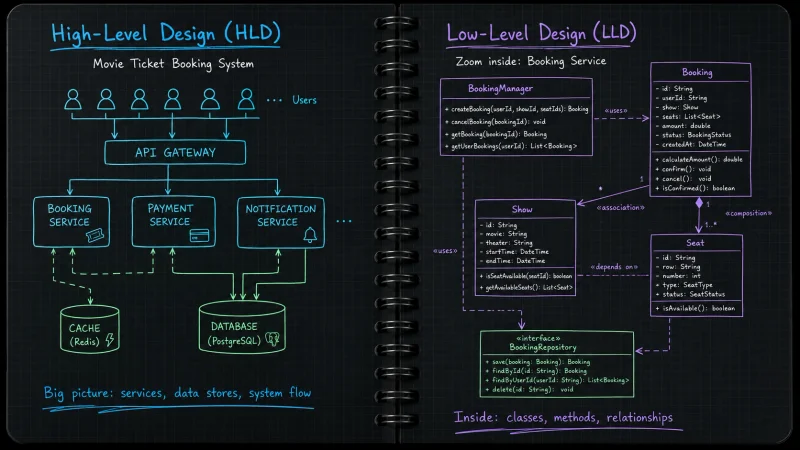
A practical low level design roadmap covering OOP, UML, SOLID, design patterns, concurrency, interview planning, and the systems to practise next.
Follow a connected project through LLD, Java, Spring Boot, caching, system design, Docker, Kubernetes and observability.
Open the connected projectCurriculum / 05 sections
The curriculum is grouped so you can learn in order or jump directly to the concept you need. Every subsection has its own article list and search.
Open a section with lessons you can read now.
Object design
Model responsibilities, relationships, state, and behavior before thinking about patterns.Design principles
Use principles as questions that expose change risk, unclear ownership, and unnecessary complexity.Design practice
Turn a short requirement into tested code and explain how the design can evolve.These sections outline future coverage. Articles have not been published yet.
Object design
Model responsibilities, relationships, state, and behavior before thinking about patterns.Design principles
Use principles as questions that expose change risk, unclear ownership, and unnecessary complexity.Design patterns
Learn patterns through their intent, tradeoffs, and the design pressure they resolve.Multithreading and concurrency
Design object interactions that remain correct when work happens at the same time.Design practice
Turn a short requirement into tested code and explain how the design can evolve.