Recursion in Java: A Beginner's Guide to Thinking in Smaller Problems
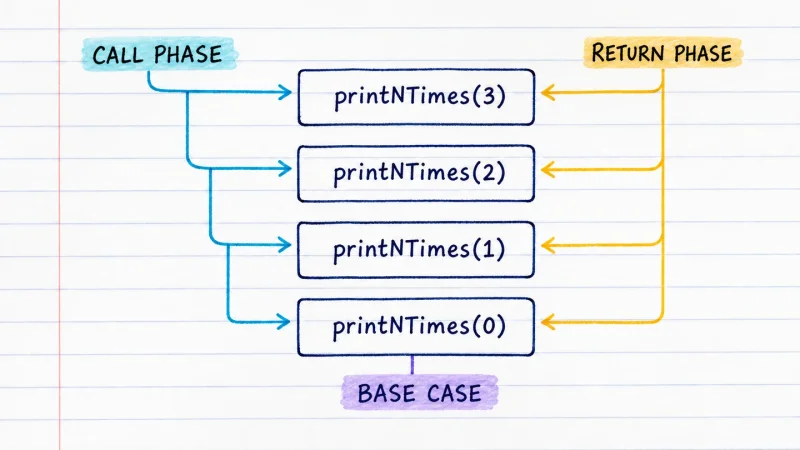
Learn recursion in Java through base cases, smaller inputs, call-stack diagrams, Java code and complete static dry runs.
Read article →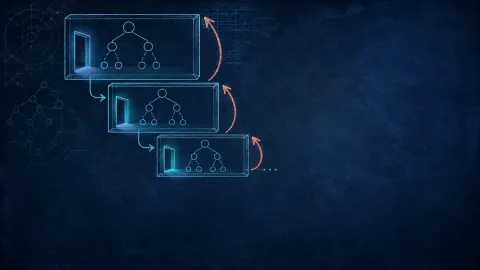
Build the mental model and learn the reusable implementation pattern.
Learn recursion in Java through base cases, smaller inputs, call-stack diagrams, Java code and complete static dry runs.
Read article →Use the core idea in a direct problem with one main decision.
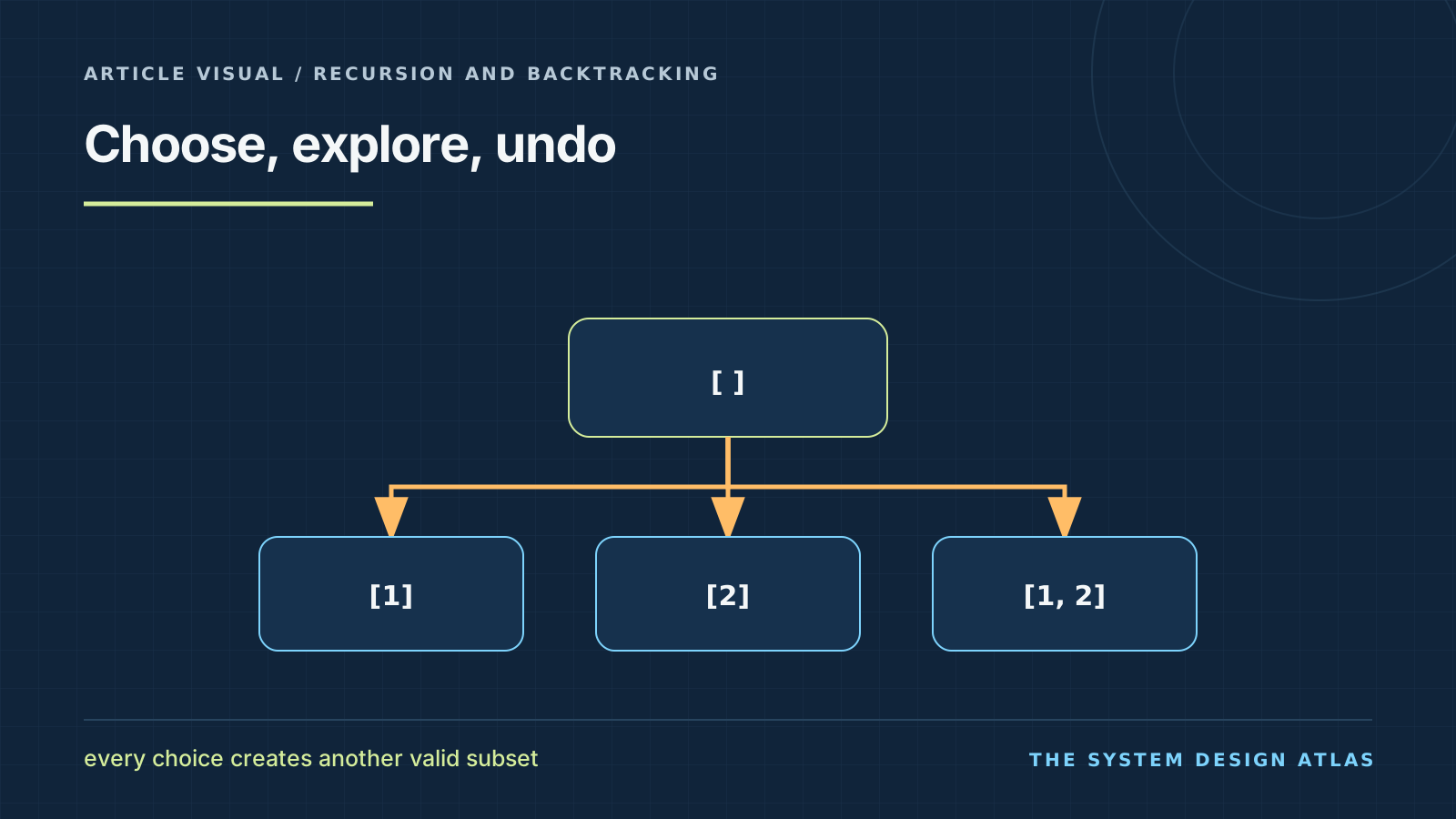
Understand take-or-skip recursion by producing every subset sum, with repeated sums, commented Java, a recursion tree and a dry run.
Read article →Reverse next and prev pointers in place, trace the saved original-next link, preserve node identity and choose safe iteration for long Java lists.
Read article →Implement insertion sort with no loops, use separate recursive sorting and shifting helpers, and explain stability, the return phase and stack cost.
Read article →Combine the pattern with boundaries, state, or another technique.
Generate every subset of a distinct integer set in Java using bitmasks and backtracking, with a visual dry run and honest complexity analysis.
Read article →Learn exponentiation by squaring, negative exponents, Integer.MIN_VALUE safety and the real call chain through commented Java.
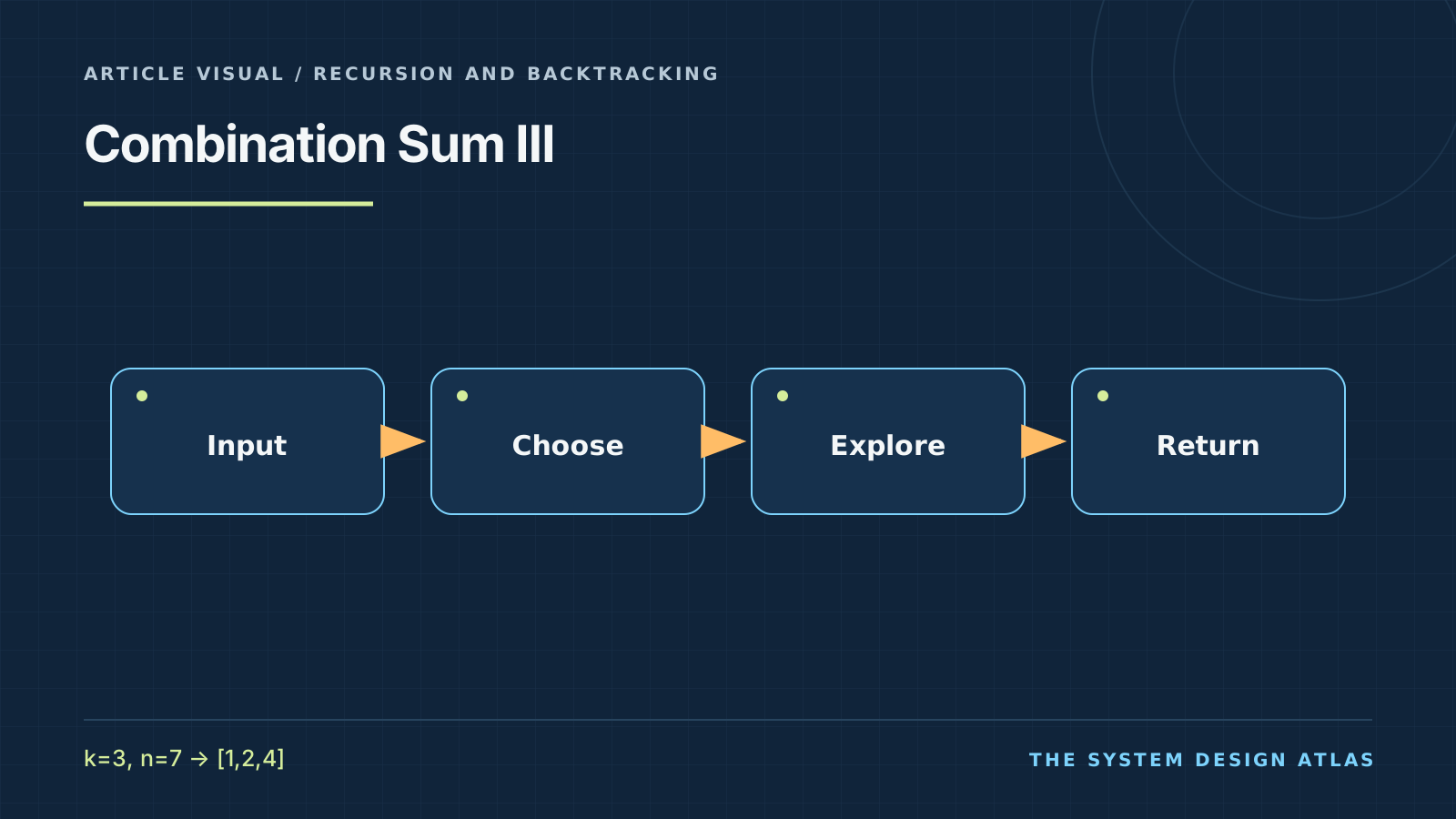
Read article →Build reusable-candidate combinations with take/skip recursion, understand the remaining target and undo steps, and analyze output-sensitive complexity.
Read article →Understand i+1, sorted candidate pruning and sibling duplicate skipping with repeated values, a worked target-sum example and commented Java.
Read article →Generate unique subsets with duplicates using sorted sibling choices, preserve repeated values inside subsets, and understand copying and undo.
Read article →Build balanced parentheses using remaining counts, understand why close must exceed open, and trace the valid prefix tree.
Read article →Generate sorted unique string permutations using your swap-and-backtrack approach, with per-position duplicate handling and an honest sorting cost.
Read article →Turn flat brace expressions into sorted choice groups, generate their Cartesian product with recursion, and distinguish nested Brace Expansion II.
Read article →Generate upside-down-symmetric numbers by filling two ends together, handling leading zero and odd centers, with code and a visual dry run.
Read article →Find the next time by bounded minute simulation, correctly handle midnight and unlimited digit reuse, and compare a recursive candidate generator.
Read article →Construct ranked tournament brackets round by round, understand Java reference passing, and count the real String-copying cost.
Read article →Solve graph coloring with tentative assignments, neighbor checks and backtracking; understand why a triangle needs three colors.
Read article →Enumerate palindrome partitions by choosing valid prefixes, copying completed paths and undoing; understand substring costs and minimum-cut differences.
Read article →Enumerate sorted maze paths with DFS, path-local visited cells and careful undo; handle blocked endpoints and preserve the input grid.
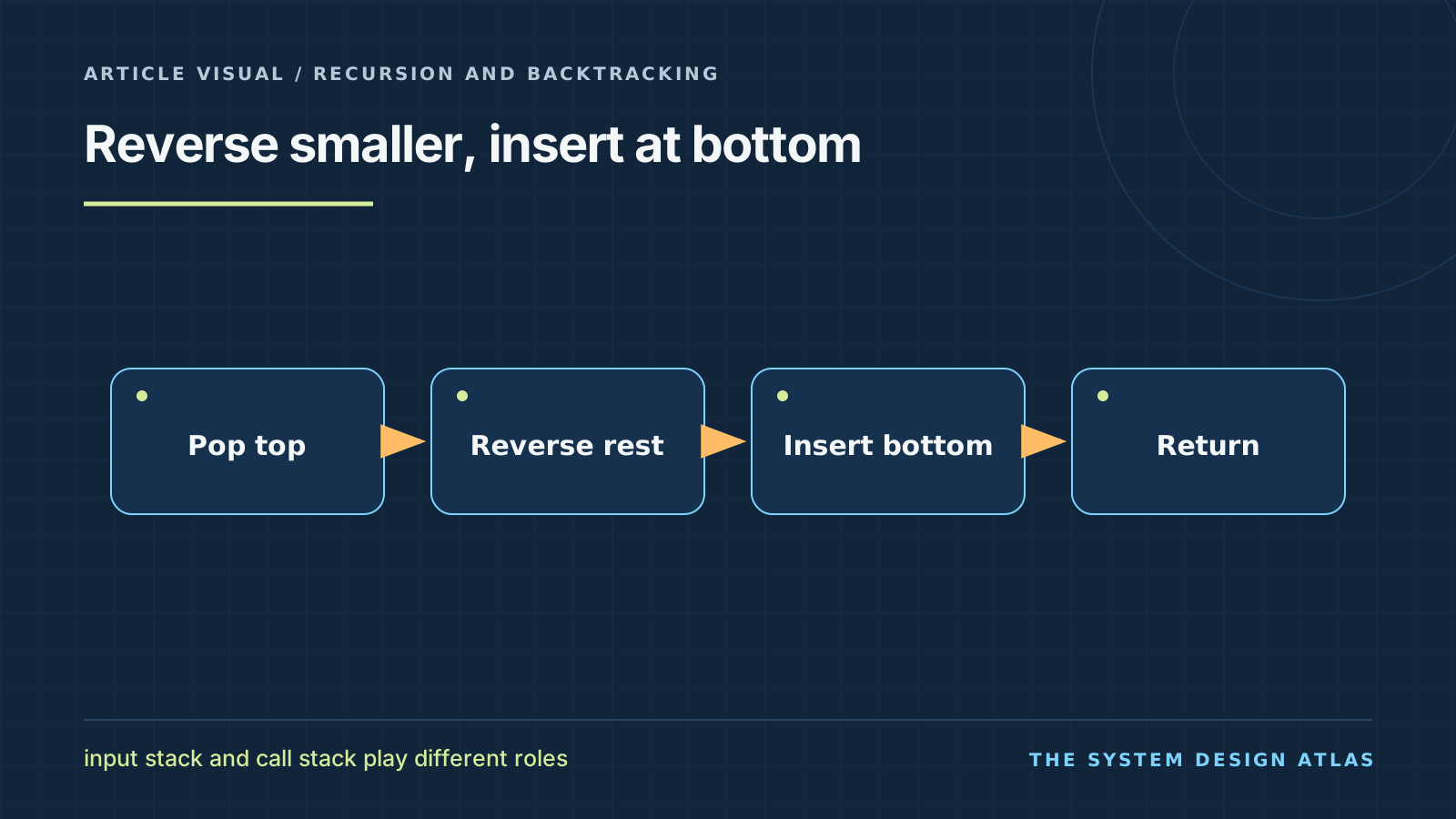
Read article →Reverse a stack using recursion only, with insert-at-bottom reasoning, LIFO dry runs, commented Java and edge-case tests.
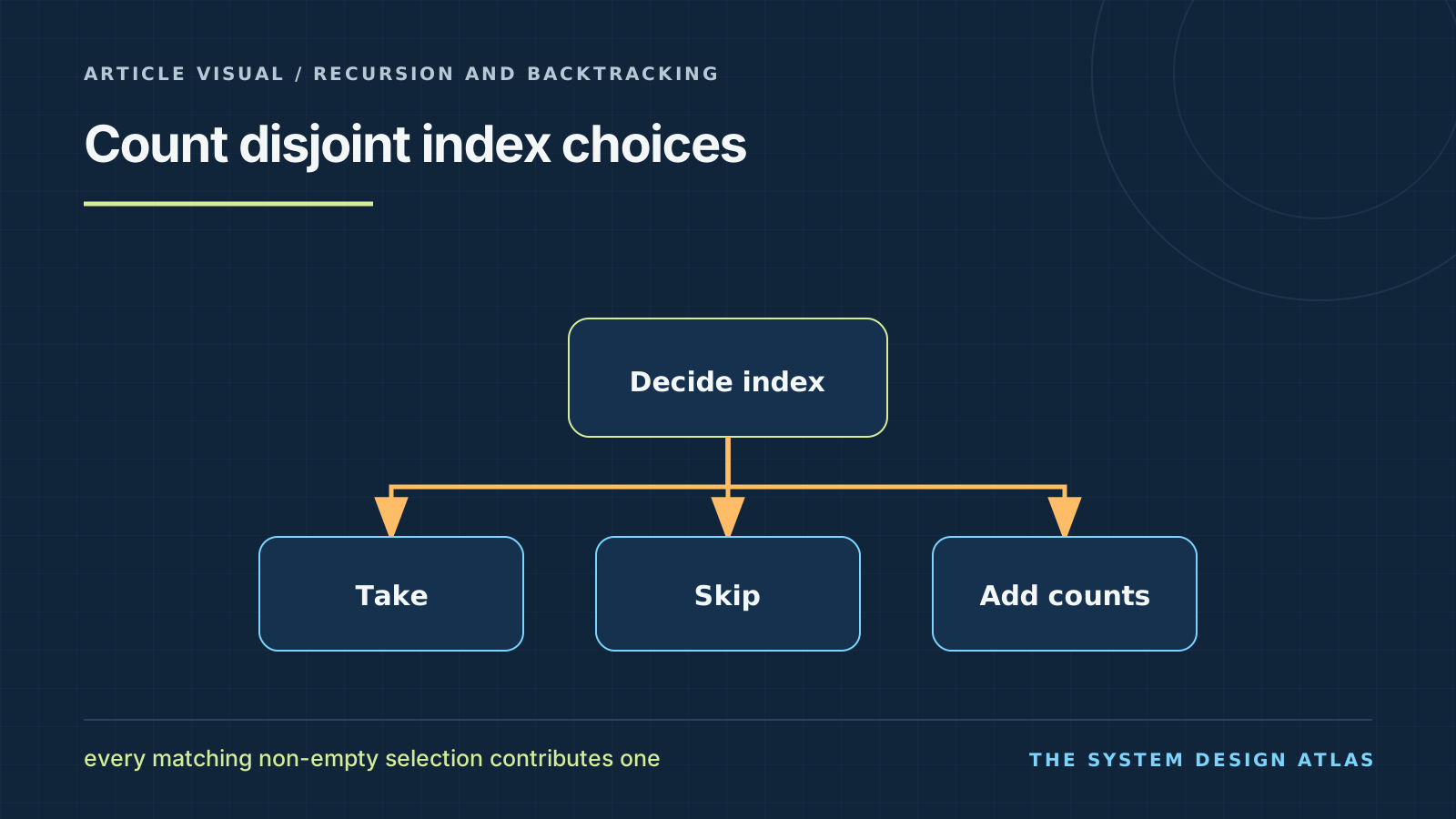
Read article →Understand take-or-skip recursion, non-empty index choices, returned counts, and positive-target dynamic programming with commented Java and a real call tree.
Read article →Find a word through adjacent grid cells using path-local visited marks, short-circuit recursion and restoration, without reusing a cell.
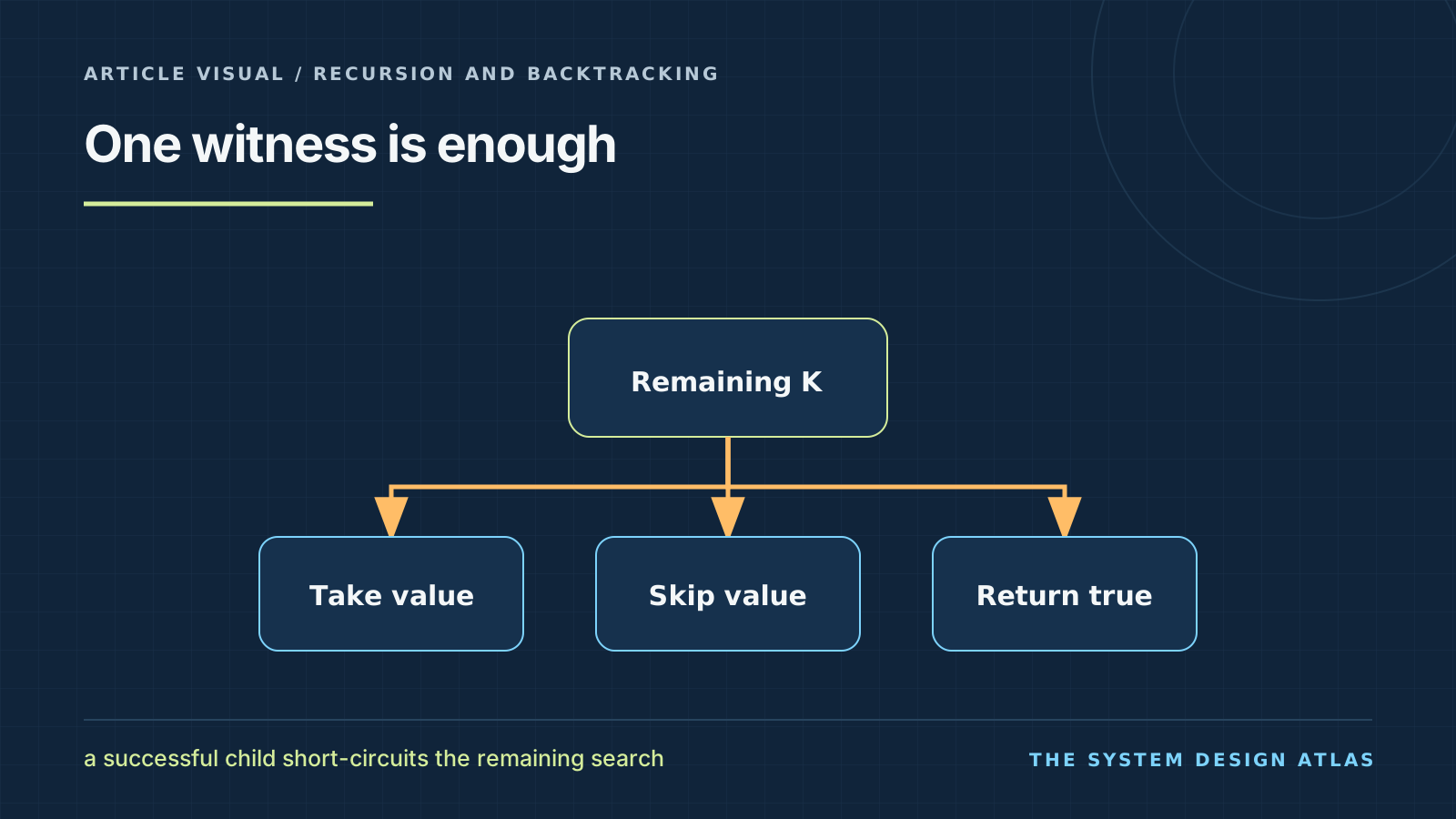
Read article →Learn why existence uses short-circuit returns, how take and skip reduce the remaining target, and how bounded subset-sum DP avoids repeated work.
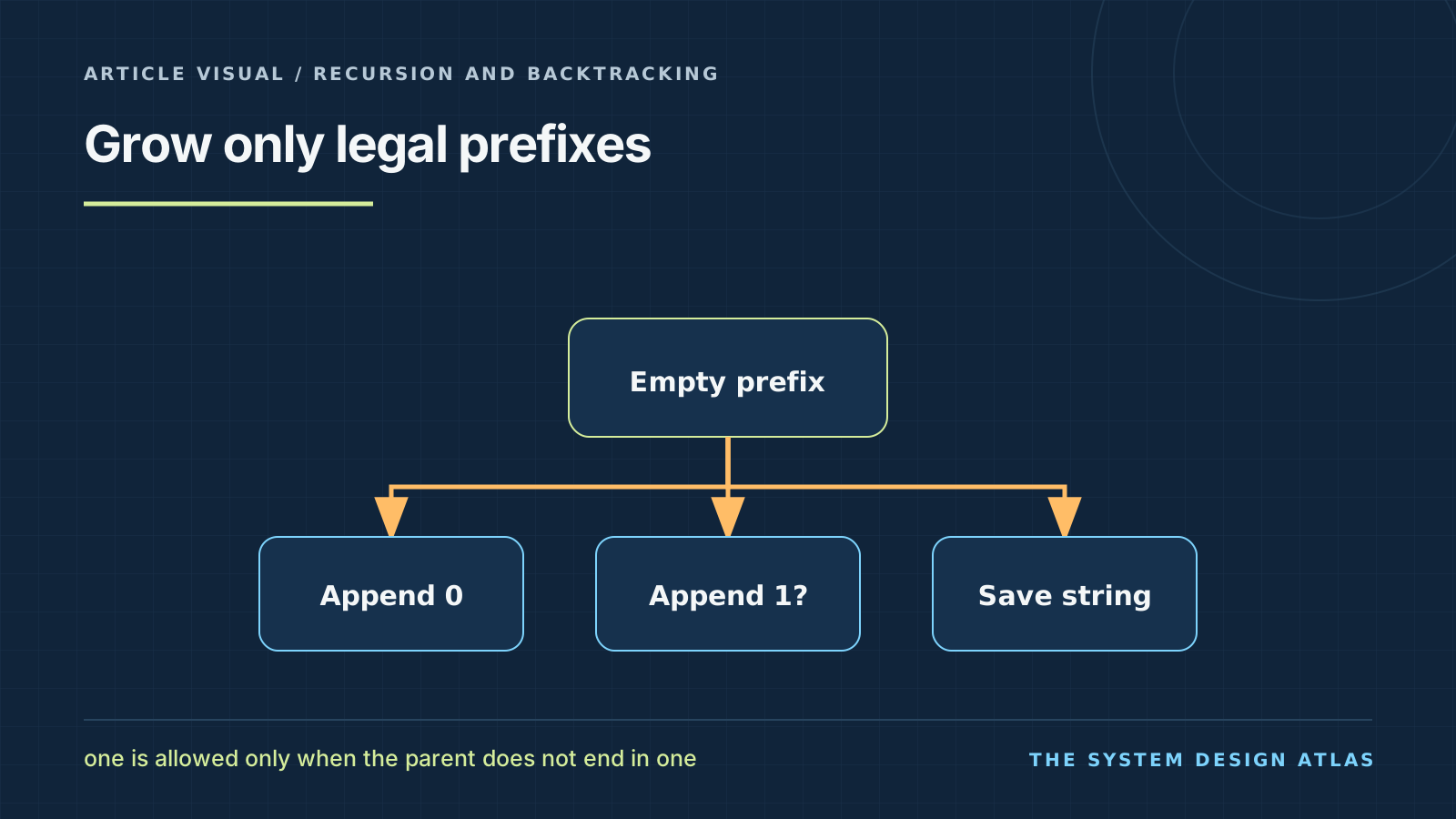
Read article →Build only valid binary strings, understand every choose-and-undo step, and connect the recursion tree to Fibonacci counts and lexicographic order.
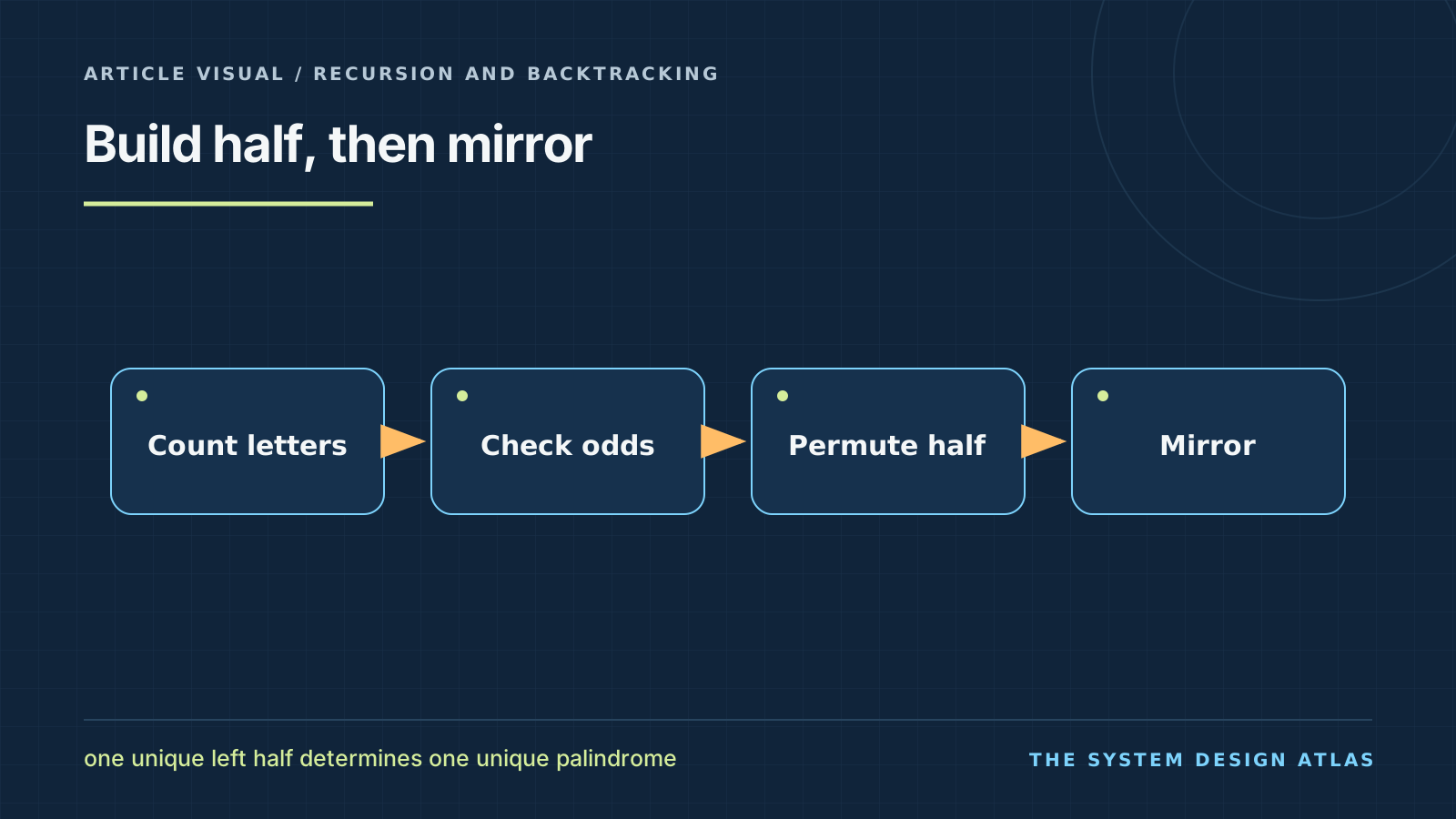
Read article →Understand odd frequencies, duplicate-free half permutations, shared state restoration, and a step-through recursion tree with fully commented Java.
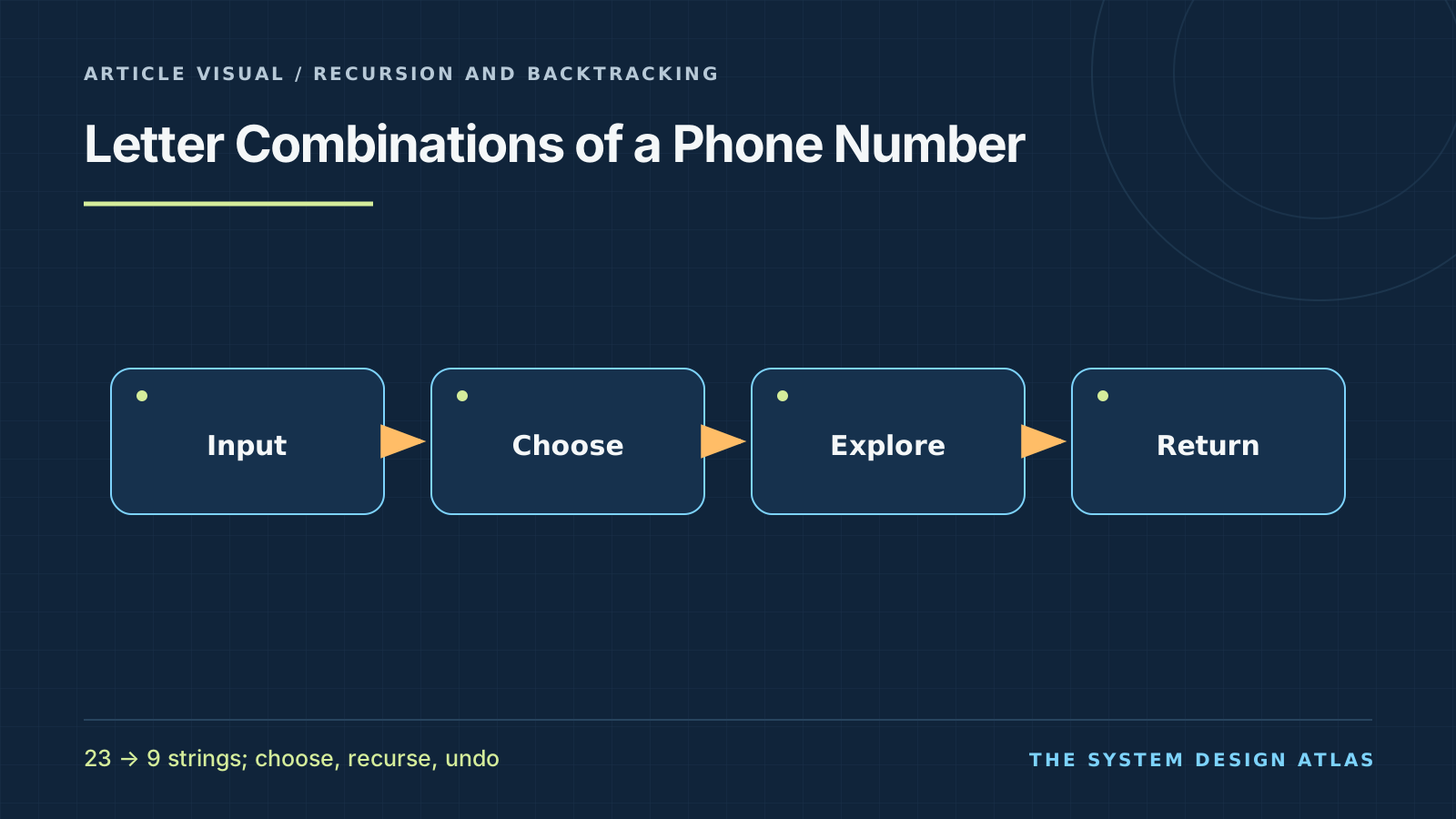
Read article →Learn phone-keypad backtracking from first principles, with examples, commented Java, a numbered image dry run, state restoration and output-sensitive complexity.
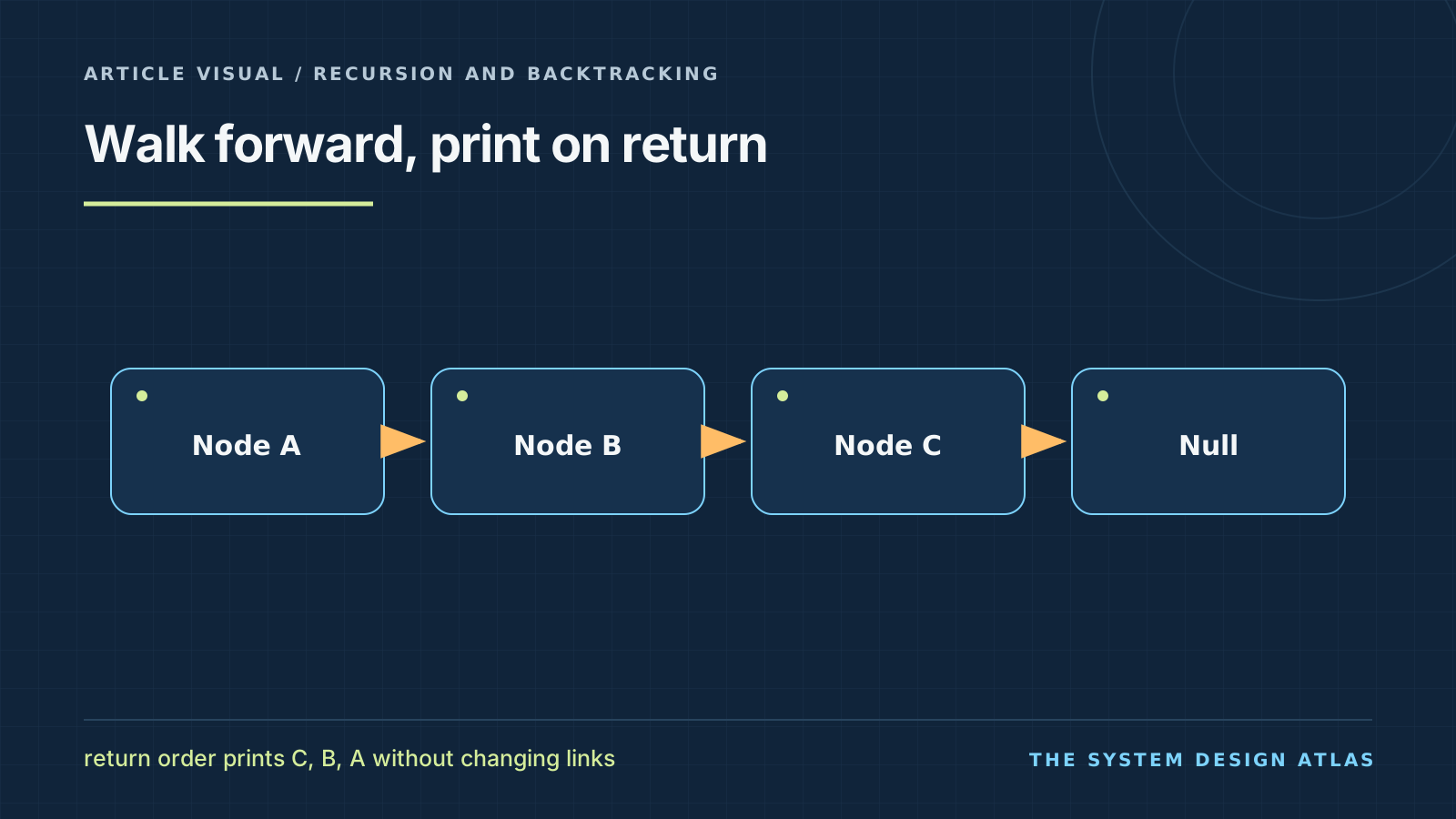
Read article →Print backward without changing links or reading hidden fields, using recursive returns, an explicit-stack alternative and an API-faithful dry run.
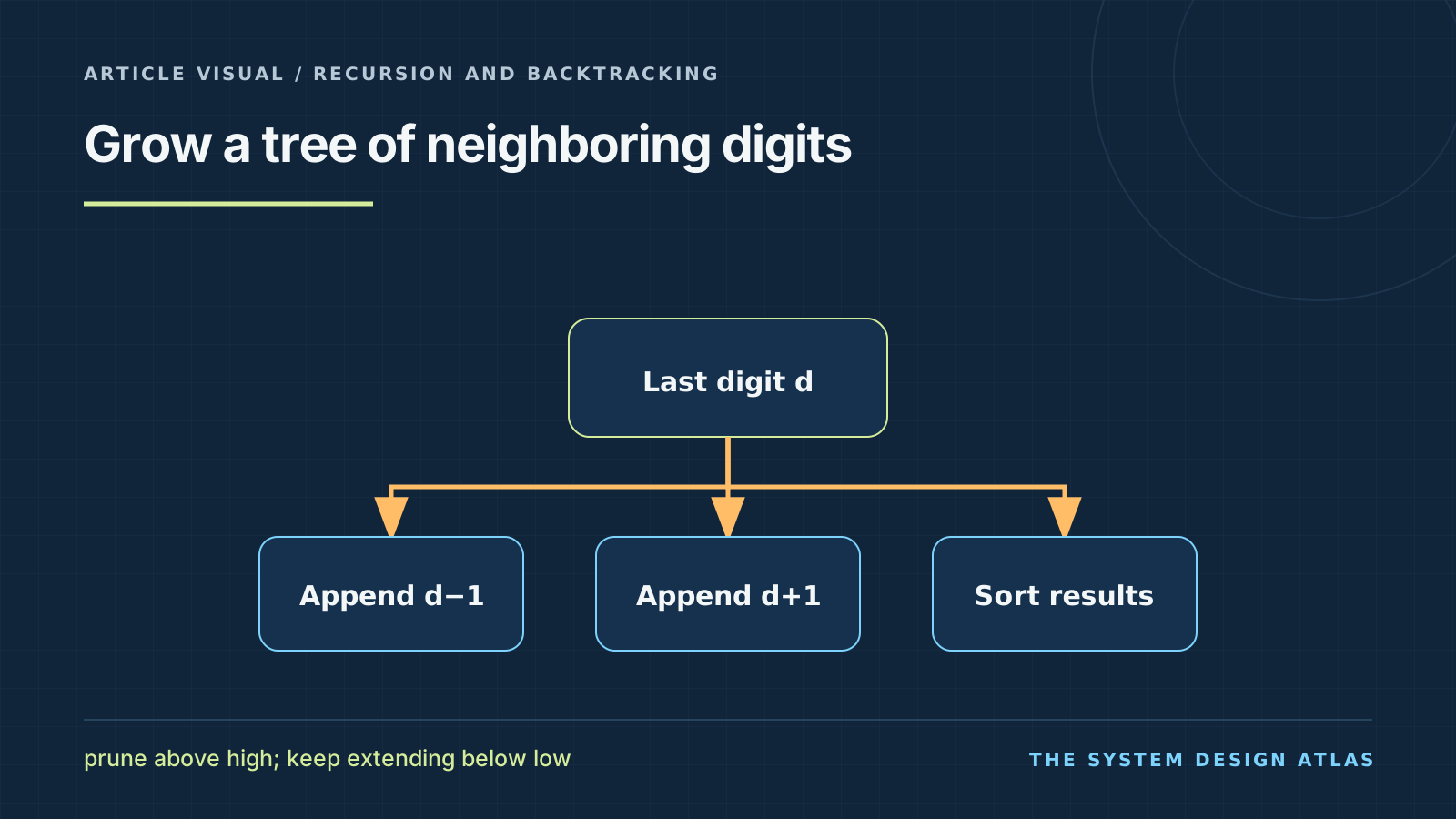
Read article →Generate sorted stepping numbers with digit-based DFS, boundary checks, safe arithmetic, an actual recursion tree, and beginner-friendly Java explanations.
Read article →Understand exactly-k digit combinations with a subset baseline, take/skip recursion, safe sum bounds, commented Java and a complete illustrated dry run.
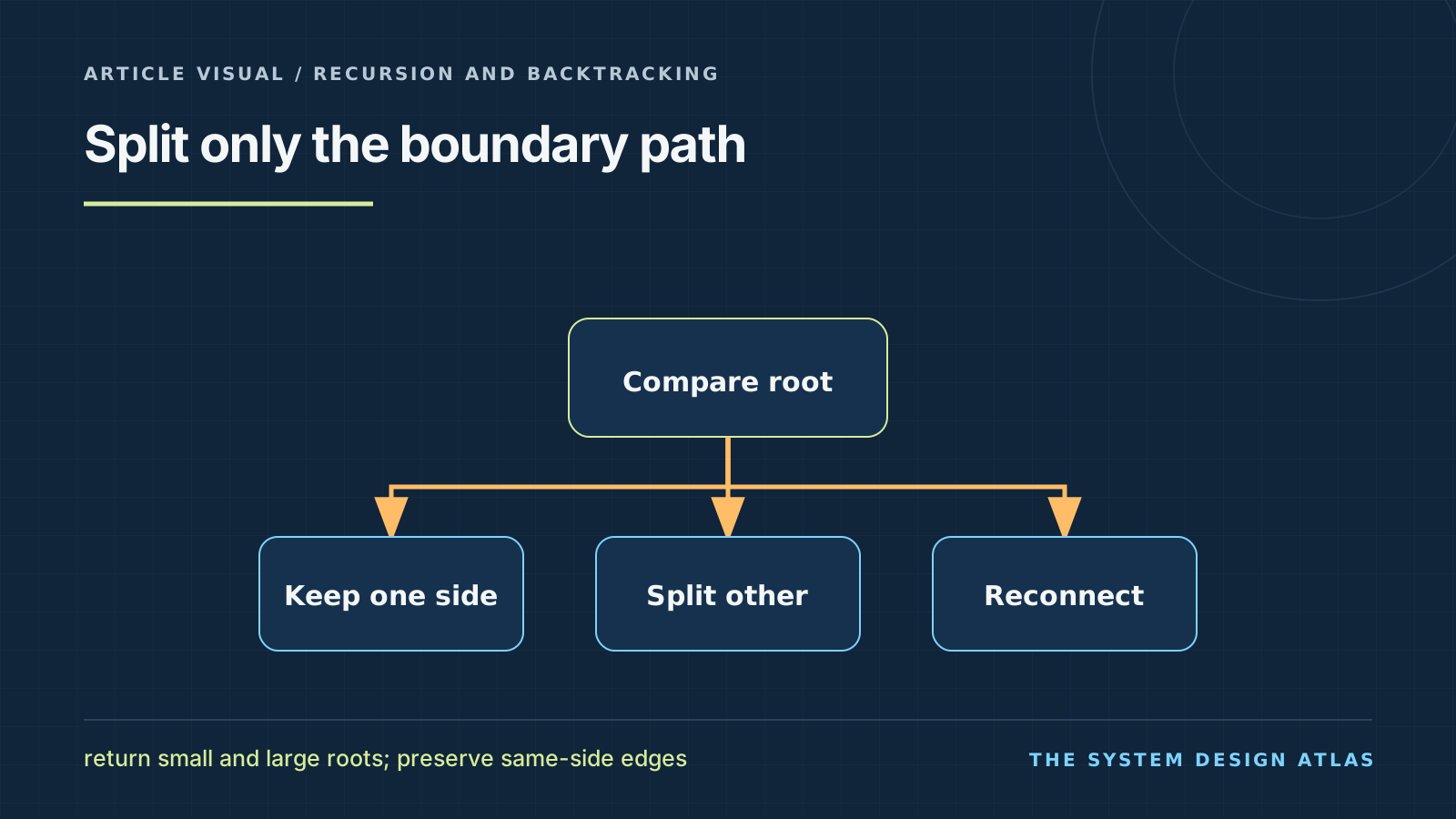
Read article →Reason about <=target and >target roots, preserve existing parent-child structure, trace pointer reconnections, and understand O(height) recursion with commented Java.
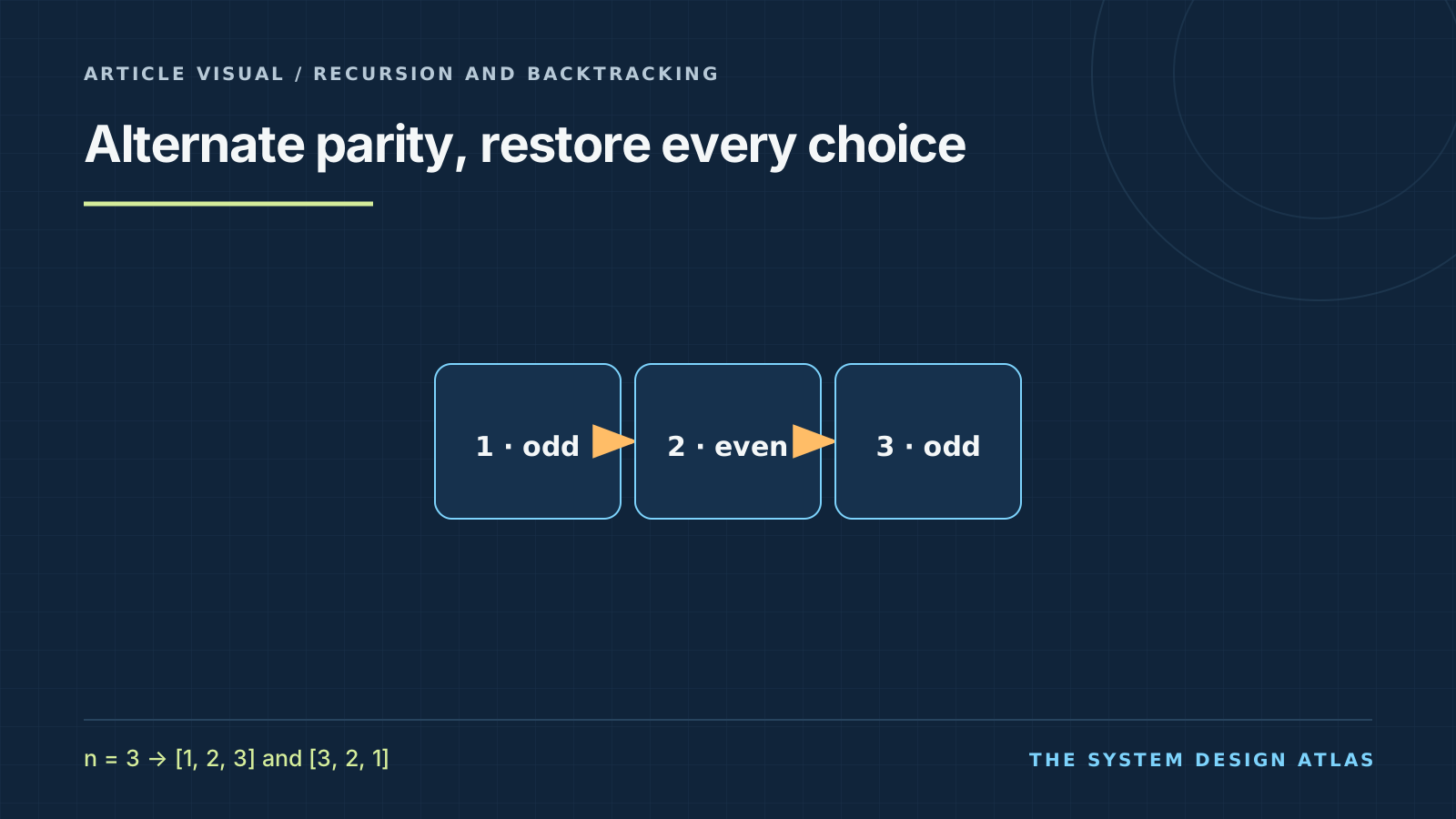
Read article →Learn parity-constrained permutations with simple reasoning, commented Java, a recursion tree and dry runs showing choices, returns and undo.
Read article →Work through problems with less obvious invariants and tighter constraints.
Understand bijection, two string indices, candidate substrings, successful short-circuiting and undo with a beginner-friendly Word Pattern II solution.
Read article →Find a complete knight tour with legal L moves, visited-state backtracking, success-preserving returns, a board example and tested Java.
Read article →Count upside-down-symmetric numbers in an inclusive string range with paired-digit recursion, safe comparisons, commented Java and a dry run.
Read article →Generate all nonattacking queen boards with row-by-row backtracking, explain diagonal keys and undo, and trace the two solutions for n=4.
Read article →Solve Sudoku in place with first-empty-cell backtracking, explain row/column/box checks, and distinguish a safe trial from a complete solution.
Read article →Understand confusing numbers with digit rotation, valid-digit DFS, a complete recursion tree, commented Java, dry runs and justified complexity.
Read article →Derive blindfolded DFS using relative coordinates, keep the robot's direction synchronized, and follow physical backtracking through commented Java and a static dry run.
Read article →Derive the kth permutation from a backtracking baseline, factorial block sizes and zero-based ranks, with commented Java and an illustrated dry run.
Read article →Build every matching arithmetic expression with operand boundaries, signed last-term tracking, leading-zero guards, commented Java and an illustrated dry run.
Read article →Derive a calculator from grammar levels, with a quadratic baseline, linear recursive descent, commented Java, cursor-by-cursor dry run and integer division rules.
Read article →